Knobs, Not Novels: Why Britain's Dashboards Need a Thumb-Friendly Rethink
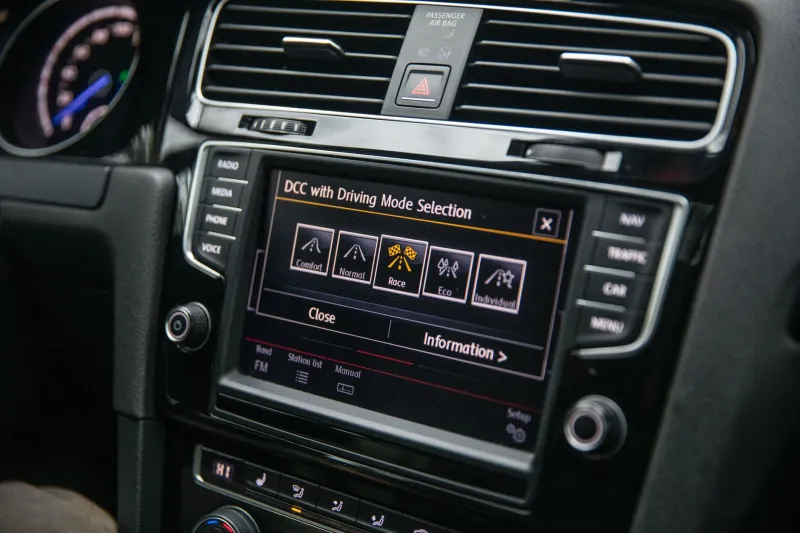
You are on the approach to a busy roundabout on a wet Tuesday in November. The windscreen is starting to mist, the radio is too loud and the car in front has braked later than you would like. In an older motor, your left hand finds the demist dial without looking. In a newer one, you stab at a glass panel, miss, open a submenu for ambient lighting and wonder why the fan has gone to full blast.
That is the touchscreen dilemma in a sentence. Not every screen is bad. Not every button is good. But the balance has swung too far towards glass, and Britain's drivers are paying for it in glances, swipes and small moments of low-level panic.
The dashboard became a tablet
Screens have earned their place. Navigation is better on a map you can pinch and zoom. Media libraries make more sense as lists than as rows of tiny buttons. EV charging schedules, energy graphs and driver-assistance settings are genuinely easier to understand on a display. Nobody at Auto Vista is arguing for a return to a dashboard made entirely of bakelite and hope.
The problem is that the industry has treated every function as fair game. Heater controls, wipers, headlights, drive modes, heated seats, radio volume and even the glovebox have been dragged into menus. What used to be a twist has become a tap, a swipe and a submenu. What used to be muscle memory has become a search task.
Cars are not phones. A phone can demand your full attention because you are standing still. A car cannot.
Euro NCAP has fired a warning shot
Euro NCAP's 2026 protocols have turned up the heat. To score five stars, cars now need proper physical controls for key functions: indicators, hazard lights, the horn, windscreen wipers and the emergency SOS call. That is not a legal ban on touchscreens. It is a ratings pressure, and ratings matter to fleet buyers, leasing companies and anyone who has ever looked at a residual value forecast.
It is also a useful line in the sand. These are functions you may need in a hurry, in the rain, in the dark, with one hand on the wheel. They should not require a glance at a screen to confirm you have pressed the right pixel.
The UK rulebook is quieter than you would think
Here in Britain, there is no blanket law saying touchscreens are illegal or that every heater must have a dial. The handheld mobile phone offence is clear enough, and drivers can be pulled up for driving without due care and attention if they are distracted. The Highway Code warns against anything that takes your attention away from the road. But there is no statute that says thou shalt have a knob for the fan.
That leaves the driver carrying the can. If you are fiddling with a climate menu while approaching a zebra crossing, the fact that the screen was built into the car is not much of a defence. The law is not a design manual, and car makers know it.
The sensible split
A grown-up dashboard should divide work properly. Physical controls belong on the functions you use often, need quickly or must find without looking: indicators, hazards, horn, wipers, lights, volume, demisting, temperature, fan speed and heated screens. Those are driving controls, not entertainment settings.
The screen can keep the things that benefit from space and context: navigation, music, podcasts, phone calls, charging information, energy use, tyre pressures and deeper vehicle settings when you are parked. Voice control can help, but it is not a magic fix. Road noise, accents, children in theback and a patchy connection all have a say.
The test is simple. If you would not want to do it while passing a parked bus on a narrow high street, it probably should not be buried three menus deep.
Why Britain makes it worse
British roads are not a lab. They are narrow, wet, patched, cambered and full of roundabouts. A touchscreen is not improved by a pothole. Nor is it improved by winter gloves, a low sun, a misted windscreen or the special chaos of a motorway services car park on a bank holiday.
Right-hand-drive layouts add another wrinkle. Some interfaces feel as though they were designed for a left-hand-drive cabin and then mirrored at the last minute. Reach, reflection and menu placement all matter more when the screen is competing with a rainy B-road.
Before you buy
If you are shopping in 2026, spend time with the controls on the test drive. Not just the infotainment. Find the demist, the hazards, the volume and the heated seats while pretending to watch the road. Ask whether the climate controls have proper shortcuts. Check whether the screen dims properly at night. If a salesperson says you will get used to it, ask whether you will get used to it before you hit a kerb.
And if you already own a screen-heavy car, set the shortcuts, learn the voice commands and resist the urge to fiddle while moving. Complex tasks can wait until you have pulled over.
The verdict
The answer is not to bin the screens. It is to stop pretending that glass is always the most advanced answer. A good dashboard is a toolbox, not a tablet glued to the windscreen. Britain should push back against touchscreen everything, not because buttons are fashionable again, but because some controls need to be felt, not found.