Twenty's Plenty — Or Is It? Wales's Default Speed Limit, Three Years On
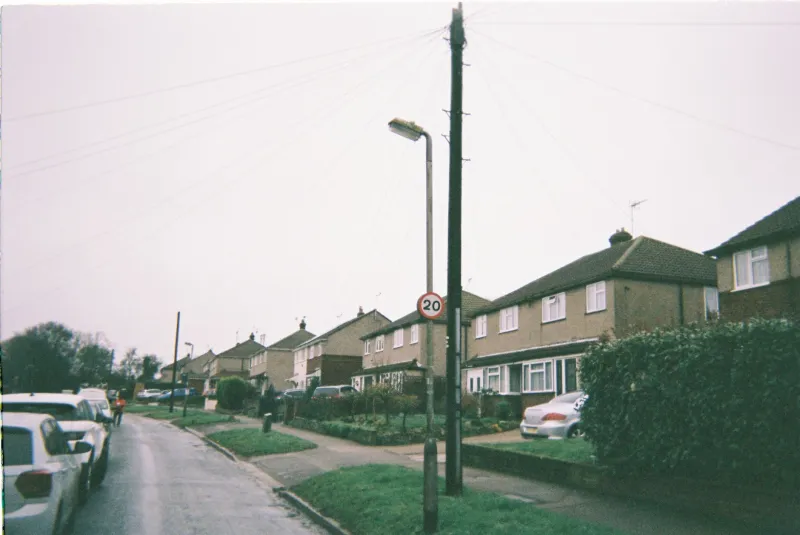
Three Septembers ago, Wales did something no other part of Britain had dared to attempt at scale. From 17 September 2023, the default limit on restricted roads — the ones with street lighting, the ones that used to mean 30mph without you even thinking about it — dropped to 20mph. Not a handful of trial zones, not a few school streets. Roughly 35,000 miles of road, changed in a single stroke.
The reaction was, to put it politely, energetic. Half a million people signed a petition. Talk radio had a very good month. And now, three years on, the noise has died down enough for the rest of us to look at what actually happened — and to ask the awkward question every driver in England wants answered: is any of this coming for us?
What actually changed on the tarmac
The first thing to say is that Welsh roads did get slower. Average speeds on the affected network fell by around 4mph in the first year, which sounds trivial until you remember that speed and injury severity are not friends. The number of vehicles doing genuinely daft speeds in built-up areas dropped sharply, and that is where the safety case lives.
Casualty figures published since have pointed the same way: fewer collisions on 20 and 30mph roads, and — more importantly — fewer people killed or seriously injured. Journey times, meanwhile, went up by well under a minute on a typical urban trip. The predicted apocalypse of the school run taking half an hour longer simply didn't materialise.
One thing the Welsh Government got right, and rarely gets credit for: the signage. In Wales, street lighting does the legal heavy lifting, so you don't need a forest of repeater signs on every residential street. Where a road genuinely needs to stay at 30, you get a sign. It's cleaner than it sounds.
The backlash never quite died
The petition got its headlines, and then councils started listening to it. By 2025 a few hundred stretches had been reviewed and switched back to 30, which is roughly what you'd expect from a policy applied at blanket scale — some roads genuinely didn't suit it. That's not a failure of the principle, it's just what happens when you move fast across an entire country.
Enforcement has been the quieter story. GoSafe's approach has leaned heavily on education-first, with fixed penalties reserved for the flagrant. Still, the cameras are there, and 20mph zones are enforced zones. Worth remembering.
England's patchwork: confusing by design?
Cross the border and the picture is entirely different. England has no national default. Instead you get London, where most of the TfL network and a huge swathe of borough roads sit at 20; Cornwall, which went early and broadly; Oxfordshire, parts of Cambridgeshire, pockets of dozens of other authorities. And then large areas where a 30 sign is still the norm and nobody's said otherwise.
That patchwork has a real cost: predictability. Drive from Chester into Flintshire and the rules change under your wheels. Drive from Surrey into Hampshire and they may or may not, depending on which street you turn down. Drivers who don't know the area end up doing 20 when they didn't need to, or 30 when they really shouldn't.
The Department for Transport's line remains that these are local decisions for local councils. Fine in principle, messy in practice.
What it's done to your insurance
Here's where it gets interesting for anyone who pays a premium. Insurers don't have a line in their pricing models marked "20mph zones" — they price claims, not signage. But the way lower limits change claims is real, if indirect.
Severity is the key word. A pedestrian hit at 30 is dramatically more likely to die than one hit at 20, and third-party injury claims are the expensive part of any motor policy. Reduce impact speeds across a whole urban network and, over time, the average severity of the claims insurers pay should drift downwards. That doesn't show up as a discount on your renewal letter, but it's part of why urban comprehensive premiums haven't spiralled as hard as the headlines suggest.
There's a sting in the tail, though. Telematics. If you're on a black-box or app-based policy, you can bet your smoothness score is being measured against mapping data that now includes 20mph limits. A driver doing a steady 28 down a residential street in Cardiff is, in the algorithm's eyes, speeding — even if they never see a camera. Check your app's trip feedback before you assume you're clean.
And the old rule still applies with full force: a conviction for speeding in a 20 zone means points, and points mean insurers notice. Three points can add a chunk to your renewal regardless of what the limit was.
What to expect next
Scotland has been moving in the same direction with its own 20mph default on restricted roads, phased in over recent years. England, though, looks set to stay patchy — with more urban authorities quietly adopting default-20 in all but name while rural counties hold the line at 30 or even 40.
What's likely to change in 2026 is the quality of the argument. We now have three years of Welsh casualty data, real journey-time numbers and a growing body of council-level evidence from England. That makes it harder for either side to shout slogans. If you live somewhere a consultation is open, it's worth five minutes of your evening — because the next round of limits will be decided by who turns up, not who complains loudest on a phone-in.
Twenty's plenty for some roads. For others it's nonsense. The Welsh experiment hasn't settled that argument — but it has at least given us something better than opinion to argue about.