The Glare Divide: Why Britain's LED Headlights Are a Bright Idea With a Blind Spot
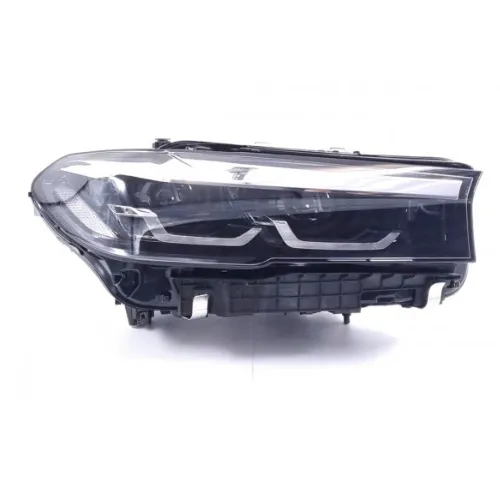
Photo: UAB Partecha, CC BY-SA 4.0, via Wikimedia Commons
It's a familiar scene on any British A-road after dark: you're cruising along, eyes adjusted to the gloom, when a pair of ultra-bright headlights crests the hill ahead. For a split second you're blinded, and the road disappears. Welcome to the LED headlight era, where visibility is up but so is the glare.
The Bright Revolution
LED headlights are now standard on everything from family hatchbacks to premium SUVs. They're more energy-efficient, last longer, and throw a whiter, more intense light than the halogen bulbs of old. Manufacturers love them because they're compact and stylish, and drivers love them because they make the road ahead look like a floodlit stage. Matrix systems go a step further, selectively dimming sections of the beam to avoid dazzling oncoming traffic while keeping the rest of the road bright. On paper, it's a win-win.
But there's a catch. As these lights become more common, complaints about dazzle have risen in kind. The RAC has flagged the issue, and forums are full of drivers grumbling about being blinded by oncoming traffic. The problem isn't necessarily the technology itself, but how it's implemented and used.
The Dazzle Dilemma
Why do LEDs cause so much glare? For starters, they produce a very intense point of light. Even with projector lenses and careful beam patterns, the contrast between the bright light source and the dark road can be stark. Add in the fact that many modern cars sit higher off the ground, and you've got headlights shining directly into the eyes of lower-slung drivers. Then there's the aftermarket wild west: halogen bulbs replaced with cheap LED conversions that scatter light everywhere but the road. These are not only illegal but also a menace to everyone else.
There's also the matter of misaimed headlights. A bumpy road, a heavy load in the boot, or a simple lack of maintenance can leave beams pointing skyward. Automatic levelling systems help, but they're not infallible. And let's not forget the drivers who simply forget to dip their main beam, or who rely too heavily on automatic high-beam assist that doesn't always react quickly enough.
Rules and Regulations: What the Law Says
In the UK, headlight regulations are governed by the Road Vehicles Lighting Regulations 1989, which set out requirements for colour, brightness, and aim. For MOT tests, headlights are checked for aim and condition, but there's no direct measurement of glare or intensity beyond ensuring the beam pattern is correct. That means a car with perfectly legal but dazzling lights can still pass its MOT.
Matrix headlights, which are becoming more widespread, operate in a grey area. While they are designed to avoid dazzling other road users, their performance can vary. The UN regulations that govern them are complex, and enforcement is tricky. The DVSA has been looking into the issue, but as of 2026 there's no blanket ban or strict brightness limit for OEM systems.
Aftermarket LED conversions are a different story. Fitting LED bulbs into a halogen reflector housing is generally illegal because the housing isn't designed for the beam pattern. These conversions often fail the MOT's beam pattern check, but many slip through. If you're tempted, don't: they're dangerous and could invalidate your insurance.
Safety vs Annoyance
It's easy to forget that bright headlights do have safety benefits. Better illumination means you can spot hazards sooner, and LED lights tend to last longer, reducing the risk of a blown bulb. Matrix systems, when working properly, can actually reduce glare for oncoming drivers while maintaining high beam elsewhere. The problem is that the benefits are not always shared equally. What's a helpful spotlight for one driver can be a blinding nuisance for another.
There's also the psychological factor: glare can cause discomfort and distraction, even if it doesn't physically blind you. That moment of squinting and looking away is enough to take your attention off the road. In heavy traffic, the cumulative effect can be exhausting.
Coping Strategies
So what can you do? First, make sure your own lights are correctly aimed and in good condition. A dirty headlight can scatter light and increase glare for others. If you're buying a used car, check that the headlights are original and properly adjusted.
When you're on the receiving end of glare, try not to look directly at the oncoming lights. Instead, focus on the left edge of your lane or the road markings. This helps you maintain your position without being blinded. Keep your windscreen clean inside and out; a smeary screen makes glare much worse. Polarised sunglasses can help during the day, but at night they're not advisable. Some drivers swear by anti-glare night glasses with yellow lenses, though evidence for their effectiveness is mixed.
If you're dazzled, slow down. It sounds obvious, but giving yourself more time to react is the best defence. And if you're behind a car with dazzling rear lights, adjust your mirror or use the dimming function if you have one.
The Road Ahead
Could regulations tighten? Possibly. The European Union is reviewing headlight glare standards, and the UK may follow suit. Some safety campaigners are calling for mandatory glare testing in MOTs, while others argue for stricter limits on aftermarket bulbs. For now, the onus is on drivers to be considerate and on manufacturers to refine their systems. LED headlights are here to stay, but they need to be part of a balanced approach to night-time safety.
In the meantime, keep your eyes peeled and your wits about you. The nights are drawing in, and Britain's roads are brighter than ever.