Scale Models: The Hidden Costs of Britain's Expanding Car Waistlines
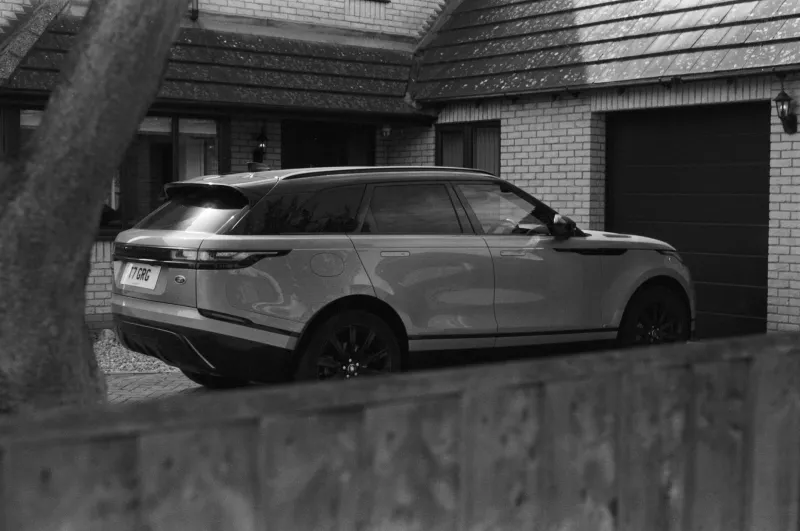
There is a quiet arms race happening on British driveways, and nobody is handing out medals. Cars are getting heavier. Not by a little, either. The cheeky supermini that once tipped the scales at around a tonne now often nudges 1.3 tonnes, while a mainstream family SUV can comfortably sail past 1.8 tonnes before you have loaded a single child, dog or bag of shopping. Add a sizable battery pack and you are looking at two tonnes or more — a figure that used to be the preserve of proper off-roaders and small vans.
None of this is accidental. Safety regulations, sound deadening, bigger screens, panoramic roofs, ever-larger wheels and the simple fact that British buyers keep choosing taller, roomier cars have all piled on the kilos. Electric vehicles add another layer, because batteries are heavy. The result is a fleet that is, on average, considerably porkier than it was a decade ago. The question is whether drivers are factoring that into their next purchase — or just assuming that more metal automatically means more safety.
Why Are Cars Ballooning?
Start with safety. Modern crash structures, side-impact bars, airbags everywhere and pedestrian-protection requirements all add mass. Then there is the equipment arms race: electrically adjustable seats, dual-zone climate control, infotainment systems, cameras, sensors and sound insulation. A car that feels serene at 70mph does not get there by magic; it gets there with sound-deadening material and thicker glass.
The shift to SUVs has made things worse. Taller bodywork means more metal, larger wheels and beefier suspension components. Buyers like the commanding view and the perceived robustness, but the physics are unforgiving. Meanwhile, electric cars carry their batteries low down, which helps handling, but a 60kWh-plus pack is not light. A family EV that feels nimble around town may still weigh as much as a small delivery van.
The Tyre Tax
Weight hits your wallet first at the tyre bay. Heavier cars need higher load ratings, and they tend to wear through rubber faster, especially on the front axle if you are doing lots of urban stop-start driving. Bigger wheels and wider tyres — common on heavier models — cost more to replace, too. A set of four tyres on a two-tonne SUV can easily run to several hundred pounds, and that is before you discover the optional extra of a puncture on a smart motorway.
The advice here is simple: check the tyre load index on the sidewall and make sure any replacement matches or exceeds the manufacturer's specification. Do not let a fitter talk you into a cheaper tyre with a lower load rating. On a heavy car, that is a false economy with a side order of risk.
Stopping Distances: The Physics You Cannot Argue With
Brakes have improved enormously, but they still have to dissipate the energy of a moving mass. The kinetic energy a car carries rises with the square of its speed and in direct proportion to its weight. In plain English: a heavier car at 60mph takes more stopping than a lighter one, even with clever brake-by-wire systems and sticky tyres. In the dry, on a good road, you might not notice. In the wet, on a greasy B-road, or when a child steps out between parked cars, the difference matters.
This is not a reason to panic about every SUV on the school run. It is a reason to resist the idea that weight equals safety. A lighter car with good crash structures and modern driver assistance can be just as protective as a heavier one — and it will be easier to stop and steer around trouble.
Roads, Bridges and Multi-Storeys
There is a broader bill, too. Road wear is not proportional to weight in a neat, linear way. Pavement engineers often talk about the fourth-power rule: damage rises sharply with axle load. A modest increase in the weight of the average car does not bring the M6 to its knees overnight, but a fleet of increasingly heavy vehicles does accelerate wear on residential streets, rural lanes and older bridges.
Multi-storey car parks are another consideration. Many were designed decades ago for the cars of the time. They are routinely inspected and maintained, and they have safety factors built in, but the trend towards two-tonne family transport is exactly the sort of thing structural engineers keep an eye on. If a car park has a posted weight limit, take it seriously. If it feels ancient and cramped, drive slowly and avoid kerbing those wide alloy wheels.
Insurance Groups and the Paper Trail
Weight itself is not usually the headline factor in an insurance group, but it is part of the picture. Heavier cars often sit in higher groups because they cost more to repair, consume more fuel or electricity, and cause more damage in a collision. A two-tonne SUV that shunts another vehicle is likely to leave a bigger repair bill than a 1.1-tonne hatchback. Insurers price for that.
There is also the question of payload. A car's kerb weight is only half the story; the gross vehicle weight and payload figures tell you how much you can actually carry. A heavy car with a low payload can be surprisingly easy to overload with five adults and a full boot. Check the door-jamb sticker and the handbook before you assume a big car can swallow everything.
How to Weigh Up Your Next Purchase
You do not need to memorise physics textbooks to make a sensible choice. Start by looking up the kerb weight of any car you are considering, then compare it with rivals. Check the payload figure if you regularly carry a full complement of passengers or tow a caravan. Look at the tyre size and load rating, because that is where weight turns into recurring cost. And take a test drive on a variety of roads, not just a smooth dual carriageway.
Most of all, resist the marketing suggestion that heavier is inherently safer or more premium. In 2026, the cleverest cars are often the ones that manage their weight rather than simply adding more. A lighter car will usually be kinder to its tyres, its brakes, your fuel bill and the road beneath it. That is not a moral judgment — it is just arithmetic. And in a cost-of-living squeeze, arithmetic is worth paying attention to.