The Invisible Handshake: Why Keyless Cars Keep Vanishing From British Driveways
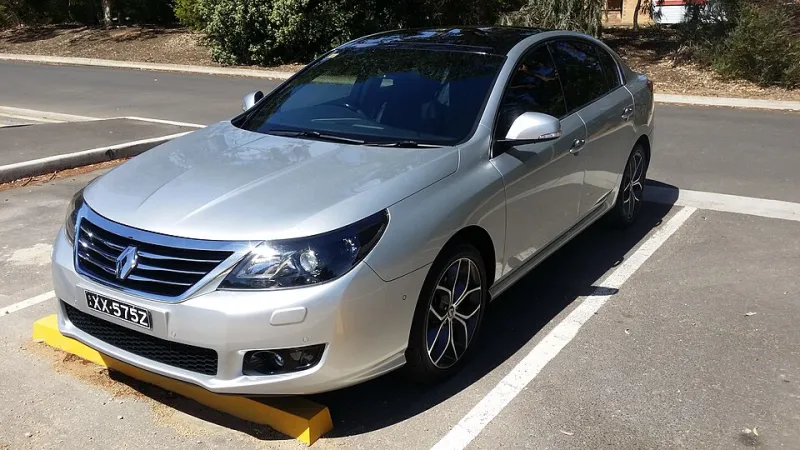
Photo: TuRbO_J from Adelaide, Australia, CC BY 2.0, via Wikimedia Commons
There is a particular kind of theft that leaves no glass on the drive, no alarm on the CCTV and no obvious sign that anything happened until the morning. The car was locked. The keys were indoors. And yet the vehicle has gone. In 2026, keyless entry is standard on everything from city cars to large SUVs, and the relay attack remains one of the most effective ways to steal them.
The uncomfortable truth is that this is not a problem of exotic hacking. It is a problem of convenience. Your key fob is designed to broadcast a short-range signal so the car knows you are nearby. Relay equipment simply extends that conversation further than it was ever meant to go.
The theft that looks like nothing
Traditional car crime involved force: a smashed window, a snapped steering lock, a hot-wired ignition. Relay theft is quieter and more polite. Two thieves typically work together. One stands near your front door with a device that captures the fob's signal from inside the house. The other stands next to the car with a receiver that replays that signal. The car concludes that the key is present, unlocks, and allows the engine to start. The whole exchange can be over in less time than it takes to load a dishwasher.
Because there is no break-in, neighbours notice nothing. Doorbell footage often shows someone walking past, pausing, and then driving away. It looks like the owner leaving. That is precisely the point.
How a relay attack actually works
Keyless systems rely on a low-frequency handshake and a higher-frequency response. The fob wakes up when it detects the car's signal, then transmits a code. Relay kits effectively become a long cable: one end sniffs the fob inside the house, the other end sits by the car door. The car and fob complete their normal conversation, just across a much greater distance than intended.
You do not need to be a technical wizard to buy this kit. That is the grim part. The hardware is available online, often marketed as diagnostic or locksmith equipment, and it is not especially expensive. The barrier to entry is low, which is why police forces across the UK continue to treat keyless theft as an organised-crime issue rather than opportunistic opportunism.
Which cars are in the frame
Almost any vehicle with keyless entry and push-button start can be targeted, but vulnerability varies. Older keyless systems that use static or weakly rolling codes are easier to replay. Models where the fob keeps transmitting even when stationary are more exposed. Cars with a keyless system that shuts the fob down after a period of inactivity — motion sensors inside the fob are the giveaway — are harder work.
Some manufacturers have moved to ultra-wideband (UWB) technology, which measures the time it takes for signals to travel and can therefore estimate distance more accurately. That makes simple relay attacks much harder. But UWB is not universal, and plenty of 2026 cars on British roads still rely on older systems. If you are buying used, it is worth asking what security generation the car has. If you already own a vulnerable model, the answer is not despair; it is layers.
What insurers are doing — and what they are not
Insurers have not been slow to notice. Many now ask detailed questions about keyless entry, parking location and whether a tracking device is fitted. Some require a Thatcham-approved tracker — typically S5 or S7 — before they will offer cover on certain high-risk models. Others have raised excesses or tightened postcode criteria in hotspots.
That said, the market is not uniform. Some policies still pay out on relay theft, provided you can show the keys were secure and the car was locked. Others have clauses around "reasonable care" that can become a battleground. The practical lesson is to read the security section of your policy before you need it. If your car is a known target, a tracking device can be the difference between a premium you can stomach and a renewal quote that makes your eyes water.
Reported hotspots tend to follow population density and motorway access. London and the Home Counties feature heavily, as do parts of the West Midlands and major commuter corridors. But relay theft is not exclusively a big-city problem. Quiet suburban streets with driveways are ideal hunting grounds precisely because they are quiet.
Low-tech defences that still work
This is the part where drivers often expect a gadget. In reality, the most effective defences are stubbornly physical.
A Faraday pouch or box blocks the fob's signal when it is not in use. It is cheap, simple, and effective — provided you actually use it. A pouch left open on the hall table is just a small bag. A fob dropped in a metal tin can work as a makeshift shield, though a purpose-made pouch is more reliable.
A steering-wheel lock is deeply unfashionable and deeply annoying to a thief. Relay kits defeat electronics, not a visible physical bar across the wheel. The same goes for a wheel clamp or a driveway bollard. These are deterrents, and deterrents matter when a thief has a choice of targets.
Turning off keyless entry, where the car allows it, is another option. Some models let you disable the passive unlock function while keeping the remote buttons working. It is a small inconvenience for a meaningful reduction in risk.
Finally, keep keys away from the front door and, ideally, away from the car's likely parking spot. A fob in a bedroom at the back of the house is harder to relay than one hanging on a hook beside the porch.
A checklist for tonight
- Put every keyless fob in a signal-blocking pouch or box when you get home.
- Store keys away from doors and windows, not on a hallway hook.
- Use a physical steering lock if your car is a known target.
- Check whether your car's keyless entry can be disabled.
- Consider a Thatcham-approved tracker, especially if your insurer asks for one.
- Park facing a wall or another car where possible; it makes tow-away and relay work harder.
- Keep software updates current if your manufacturer issues security patches.
- Review your insurance policy's theft conditions before renewal, not after a loss.
The relay attack race is not one that drivers can win with technology alone. But it is not a race we have to lose by default, either. A few unglamorous habits — pouch, lock, placement — close the easiest door. And in car crime, the easiest door is usually the one that gets used.