Rubber Roulette: The £30 Tyre That Can Cost You Four Figures
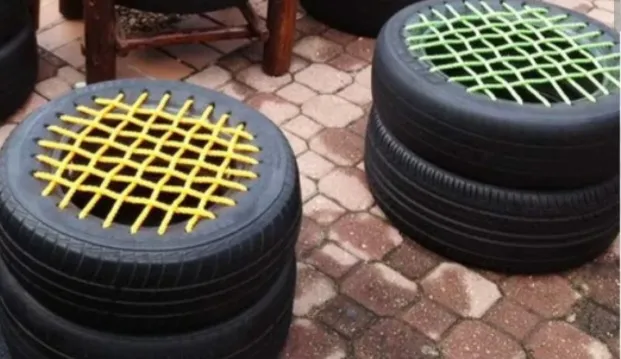
Photo: Bonolo Nikita Rankaga, CC0, via Wikimedia Commons
Walk into almost any backstreet tyre bay in Britain and you’ll see them: neat stacks of scuffed rubber with a few millimetres of tread left and a price tag that looks like a misprint. Thirty quid, fitted and balanced, out the door. When money is tight, that is a seriously tempting offer. But a part-worn tyre is not just a second-hand shoe. It is a safety-critical component with a history you cannot see, and the difference between a genuine bargain and a false economy can be measured in stopping distance on a wet A-road.
That is not to say every part-worn tyre is a death trap. Plenty are legal, sound and perfectly serviceable. The problem is that the market is uneven. For every careful retailer who checks tread, age and sidewalls, there is a van in a layby selling rubber that should have gone to the recycler. In 2026, with household budgets still tight, the gap between the two is worth understanding.
Why part-worn tyres appeal
The maths is simple. A new mid-range tyre for a family hatchback might cost £70 to £120 fitted. A part-worn version can be £25 to £40. Multiply that across four corners and the saving looks like a weekend away, or a chunk off the energy bill. For drivers doing low mileage, or running an older car that is not worth much, the appeal is obvious.
There is also a green argument. Reusing a tyre that still has life in it keeps rubber out of the waste stream. That is a fair point, as far as it goes. But safety has to come first, and a tyre’s usefulness is not decided by tread depth alone. Rubber ages, sidewalls crack, and hidden structural damage does not show up in a photograph.
The law is stricter than many drivers realise
Part-worn tyres are legal to sell in the UK, but they are not a free-for-all. The Motor Vehicle Tyres (Safety) Regulations 1994 set out specific requirements. A part-worn tyre must carry a raised ‘PART-WORN’ marking at least 4mm high. It must have at least 1.6mm of tread across the central three-quarters of its width, around the entire circumference. It must not have bulges, tears, deep cuts or exposed cords, and it must not be otherwise defective.
Those rules matter, but they are a floor, not a guarantee. A tyre can pass a basic visual check and still have led a hard life. It may have taken a pothole impact, been run underinflated for months, or been repaired badly. The law cannot tell you whether it spent two years on a car with dodgy alignment or five years baking in a sunny yard. That is why buying part-worn is a judgement call, not a simple transaction.
The five-minute forecourt inspection
If you are going to look at part-worn tyres, treat it like buying a used car. Ask questions, get hands-on, and do not be rushed. A reputable seller will not mind.
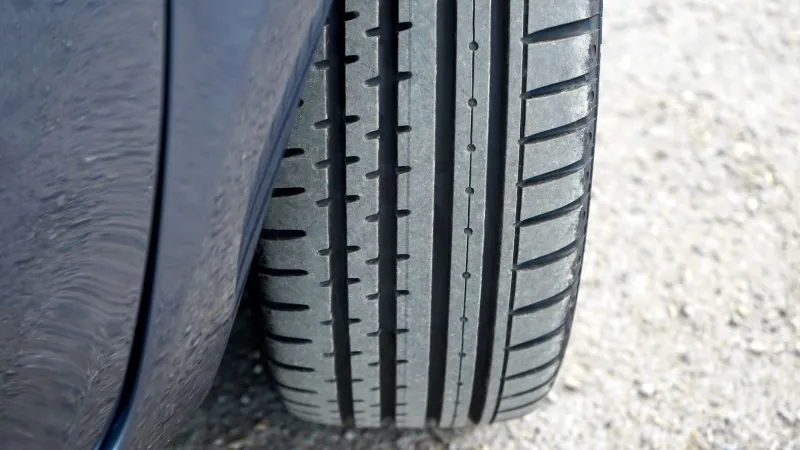
Start with the marking. If the tyre does not have a clear, raised ‘PART-WORN’ stamp, walk away. No exceptions. Then check the tread with a proper depth gauge, not a coin. Measure across the central three-quarters at several points around the tyre. The legal minimum is 1.6mm, but for wet British roads, anything close to that is already past its best. A part-worn tyre with 2mm of tread is not a bargain; it is a short-term rental.
Next, inspect the sidewalls. Look for bulges, cracks, cuts, kerb damage and any sign of exposed cords. A bulge means internal structural damage, and that tyre is scrap. Run your hand around the inside of the tyre if you can, and check the bead area for tears or distortion. Look for nails, screws or glass embedded in the tread. Small objects can be removed, but a puncture close to the sidewall is usually bad news.
Age matters too. Every tyre has a DOT code with four digits showing the week and year of manufacture. A tyre that is five years old may still be usable, but it needs a very careful inspection. At ten years old, replace it regardless of tread. Rubber degrades from the inside out, and a part-worn tyre may have spent years sitting in the sun before it ever reached the forecourt.
Finally, check that the tyre matches. The size, load index and speed rating should suit your car. Ideally, fit tyres in axle pairs, and never mix a part-worn tyre with a new one on the same axle if you can avoid it. Different tread depths and compounds can upset braking and handling, especially in the wet.
When to walk away
Some warnings are non-negotiable. Walk away if the tyre has no part-worn marking, any bulge, deep sidewall cuts, exposed cords, signs of a dubious repair, or a DOT code that is old or unreadable. Walk away if the seller cannot tell you the tyre’s history or refuses to let you inspect it. Walk away if the tread is close to the legal limit, or if the tyre is being sold as part of a mismatched set with wildly different wear rates.
And walk away if the price seems too good to be true. A £20 tyre is not a steal if it puts you in a ditch.
The bill that arrives later
Here is where the cheap tyre stops being cheap. A tyre that fails at speed can cause a blowout, loss of control, or damage to the wheel, suspension and bodywork. A single blowout that takes out an alloy, a wheel arch liner and a suspension arm can easily clear £1,000 before you have paid for a replacement tyre. That is the four-figure repair bill hiding behind a £30 saving.
There is also the insurance angle. If a tyre is found to have been unroadworthy, an insurer may reduce a payout or refuse a claim altogether. And if you are stopped with an illegal tyre, the penalty is up to £2,500 and three penalty points per tyre. Four bad tyres could mean a £10,000 fine and twelve points. That is an extreme outcome, but it is the legal reality.
Smarter ways to save
If the budget is tight, there are safer ways to cut costs. Buy the best new tyres you can afford, even if they are a budget brand from a reputable dealer. Check online prices and compare fitting costs. Keep your pressures correct, get the alignment checked, and rotate tyres where the manufacturer allows. A well-maintained set of mid-range tyres will usually outlast and outperform a dodgy set of part-worns.
If you do buy part-worn, buy from a established tyre shop with a receipt and a clear policy on returns. Ask them to show you the tread depth and the date code. And if anything feels off, trust your gut. The few pounds you save are not worth the risk you take every time you pull onto a wet motorway.
Part-worn tyres are not automatically bad. But they are a gamble, and the odds are not always in your favour. In 2026, with UK roads as rough as ever, the smartest money is spent on rubber you can trust.